Foundation · homeowner problem guides
Foundation Problems: Signs, Crack Types, Repair Costs & What To Do Next
Start with what you can see: a wall crack, a sticking door, an uneven floor, water near the foundation, or movement that seems to be getting worse. These guides help you document the symptom, compare likely causes, understand the next inspection step, and prepare better questions before hiring help.
- Symptom-first guidance
- No remote structural diagnosis
- Clear documentation steps
Popular foundation guides
Start with the answer you need.
Move from a symptom to a focused guide instead of searching through a long article.
Foundation Repair Cost
Understand repair factors, estimates, methods, and questions to ask contractors.
Read guideSigns of Foundation Problems
Learn which symptoms homeowners commonly notice and what to document.
Read guideFoundation Cracks Explained
Compare crack patterns, moisture clues, and changes worth investigating.
Read guideStart here
A foundation concern is usually a pattern, not one single clue.
Foundation symptoms can come from normal material movement, moisture, drainage, soil changes, plumbing leaks, or structural movement. The useful first step is to record what changed, where it appeared, and whether several symptoms are happening together. An on-site professional can then evaluate the building, site conditions, and history rather than guessing from a single clue.
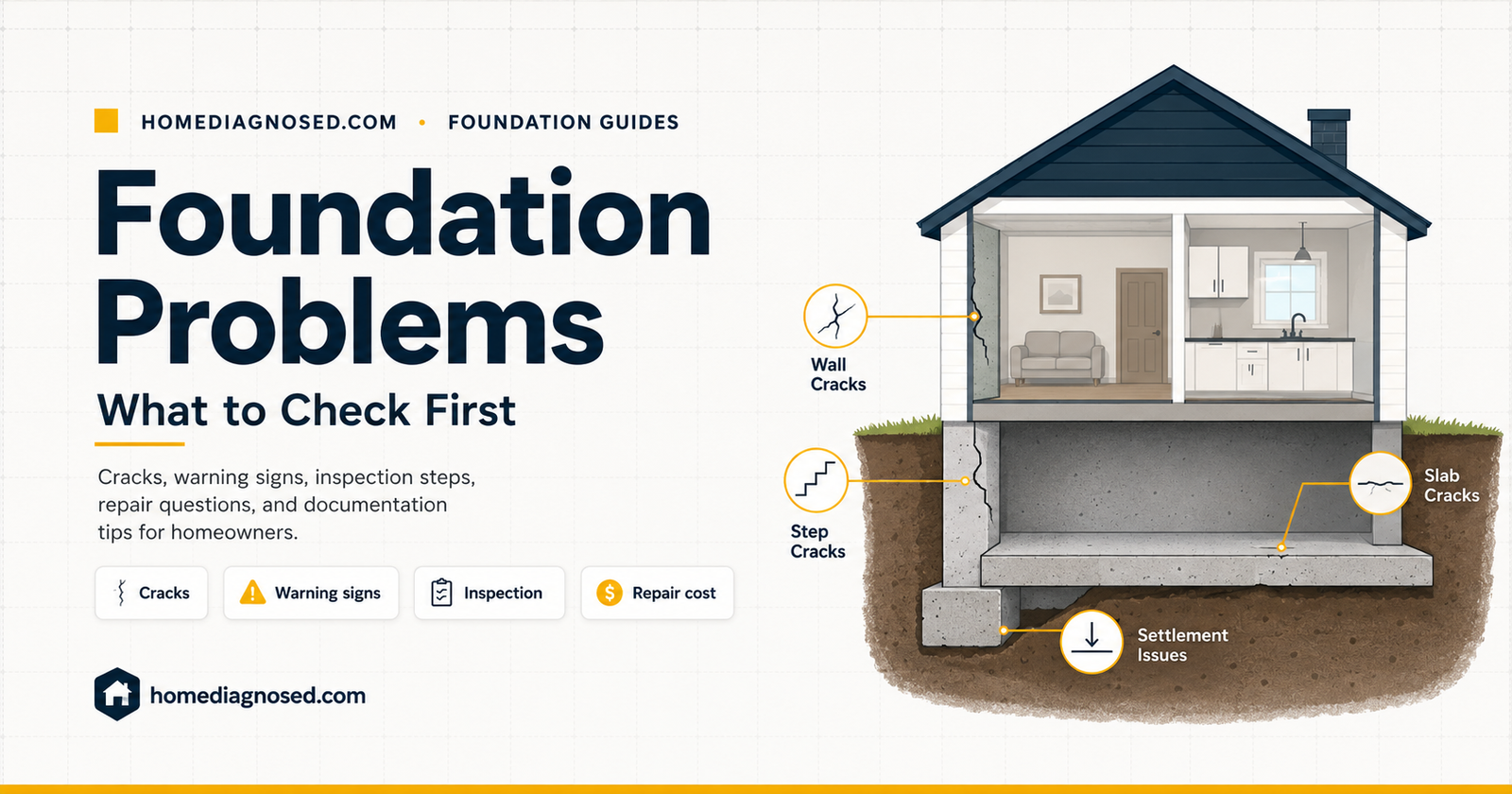
Problem finder
Start with what you noticed.
One symptom does not confirm a foundation failure. Use these cards to organize what you see and decide which details are worth documenting.
Cracks in walls or ceilings
Record direction, location, length, and whether the crack is changing.
Compare crack patternsDoors or windows that stick
Note which openings changed, when they bind, and whether gaps are uneven.
Use the priority scaleUneven or sloping floors
Look for a new change, a local dip, or movement that affects several rooms.
Prepare an inspection recordGaps around trim or cabinets
Photograph separation around frames, countertops, built-ins, and exterior joints.
Document the patternWater near the foundation
Check grading, gutters, downspouts, pooling, and recent plumbing or drainage changes.
Review moisture causesBowing or displaced walls
Visible movement, bulging, or displacement deserves prompt professional assessment.
See when to actCrack library
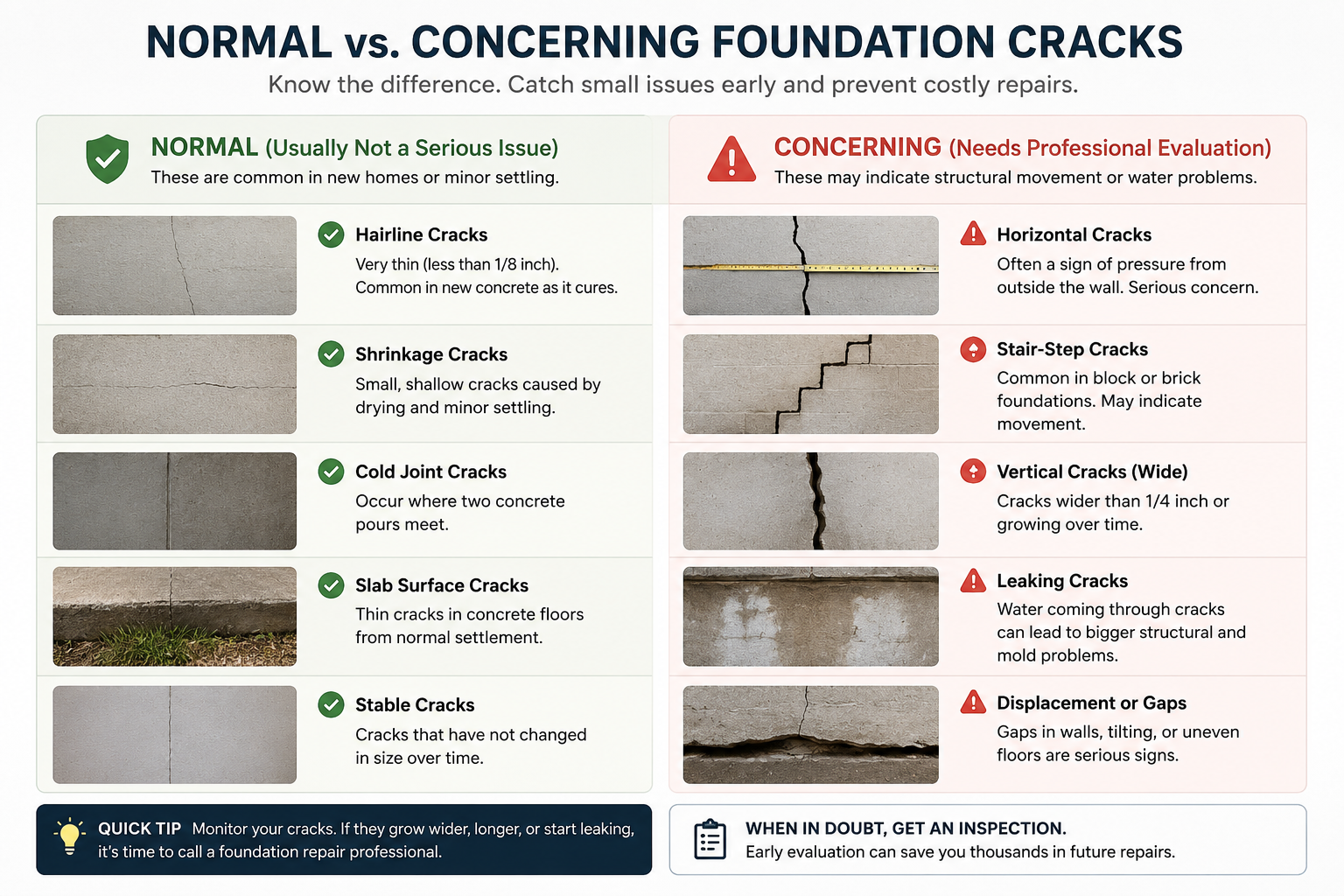
Foundation cracks are easier to understand when you compare direction, location and change.
A label such as “hairline” or “vertical” is only the beginning. Water entry, displacement, repeated movement, and related symptoms often matter more than appearance alone.
Pressure or movement clue
Horizontal foundation cracks
A horizontal pattern in a foundation wall can be more concerning when the wall also bows, shifts, or allows water through.
Check the urgency factorsCommon pattern
Vertical foundation cracks
Some vertical cracks are associated with shrinkage, but progression, width changes, leakage, and displacement still need attention.
Compare normal and concerning cluesMasonry pattern
Stair-step cracks
Stair-step cracking follows mortar joints in brick or block. Photograph the full wall so movement and surrounding gaps are visible.
Build a better photo recordFine surface clue
Hairline foundation cracks
A fine crack may be stable and cosmetic, but it should still be monitored if it is new, wet, widening, or linked to other movement.
Use the monitoring checklistFloor or slab clue
Slab-foundation cracks
Floor cracks can reflect shrinkage, settlement, heaving, or a local slab issue. Check for height differences and nearby plumbing or moisture clues.
Review possible causesBelow-grade clues
Basement wall and floor cracks
Separate a wall crack from a floor crack and note any staining, efflorescence, dampness, or active water entry.
Record moisture and locationDecision guide
Are foundation cracks normal or worth inspecting?
Some concrete and masonry cracks appear as materials cure or a building adjusts. The more useful question is whether the crack is stable and isolated, or whether it is part of a larger pattern of movement or moisture.
Avoid declaring a crack safe from a picture alone. Compare its direction, location, change over time, displacement, water entry, and any related symptoms.
Stable, isolated clues
- Fine crack with no visible displacement
- No active water entry or staining
- No matching door, floor, or wall symptoms
- No clear change in dated photographs
Changing or connected clues
- Widening, lengthening, or repeated reopening
- Bowing, bulging, offset, or visible movement
- Water entering through the crack
- Uneven floors, sticking openings, or several new cracks
Homeowner priority scale
Monitor, arrange an inspection, or act promptly.
This scale is a planning tool, not a structural diagnosis. When a condition appears unsafe or changes quickly, keep people away from the affected area and contact an appropriate local professional.
Small, stable and isolated
Take clear photos, add dates, note dimensions, and check again on a regular schedule.
Recurring, leaking or visibly changing
Gather the property history and arrange an on-site review before choosing a repair.
Displacement, bowing or rapid movement
Limit access where appropriate and contact a qualified professional without relying on DIY fixes.
Foundation types
The same symptom can mean something different on a different foundation.
Construction method, soil, drainage, age, climate, and prior repairs all change how an issue should be investigated.
Slab foundations
Watch for slab cracks, floor-level changes, plumbing clues, and movement around openings.
Crawl-space foundations
Moisture, wood condition, pier movement, drainage, and ventilation may all affect symptoms.
Pier-and-beam foundations
Look for floor movement, pier or beam condition, moisture, and changes beneath the structure.
Basement foundations
Separate wall pressure, floor cracks, water entry, and drainage from cosmetic surface changes.
Block or masonry foundations
Mortar-joint patterns, stair-step cracks, bowing, and moisture often provide useful context.
Older-home foundations
Materials, previous modifications, drainage history, and long-term movement need careful review.
Possible causes
Before choosing a repair, identify what may be driving the movement.
Sealing a crack can improve appearance or limit water entry, but it may not address the reason the crack formed. A useful assessment considers site water, soil behavior, plumbing, construction, and the building's repair history.
Drainage and grading
Pooling water, short downspouts, poor grading, and clogged gutters can change soil moisture near the house.
Expansive or drying soil
Some soils swell when wet and shrink when dry, creating repeated movement around a foundation.
Plumbing or water leaks
Hidden leaks can affect soil conditions, create voids, or add moisture where it should not be.
Erosion or washout
Concentrated runoff may remove supporting soil or reveal drainage defects around footings and slabs.
Tree and vegetation changes
Roots, irrigation, and removing established trees can alter moisture patterns near a foundation.
Construction or previous repair
Additions, altered drainage, incomplete repairs, and different foundation sections may move differently.
Inspection preparation
Document the house before anyone covers, seals or repairs the symptom.
Good records make contractor conversations more useful and can help preserve a timeline for an insurer, engineer, buyer, seller, or future homeowner.
Foundation repair explained
Repair should follow the cause, not just the visible crack.
Foundation work ranges from moisture and drainage correction to crack sealing, wall stabilization, pier systems, underpinning, lifting, or rebuilding. The appropriate method depends on the foundation type, movement, soil, access, local practice, and the professional assessment.
How foundation repair works
Start with investigation, measurements, cause, repair objective, and a written scope.
Repair methods
Ask what each method is meant to correct, what it will not correct, and how performance is monitored.
Repair timeline
Duration depends on access, permits, weather, engineering, materials, and the size of the work.
Living in the house during repair
Ask about access, noise, utilities, dust, excavation, temporary support, and any areas that should remain unused.
Cost and coverage
The price depends on what is moving, why it is moving, and what the repair must achieve.
A useful estimate should describe the observed condition, proposed method, quantity, access, exclusions, engineering needs, permits, restoration, and warranty.
Cost guide
What changes foundation repair cost?
- Foundation type and affected area
- Cause and severity of movement
- Excavation and access
- Waterproofing or drainage work
- Engineering, permits, and monitoring
- Interior and exterior restoration
Estimate comparison
Ask every contractor the same questions.
- What evidence supports this diagnosis?
- What is included and excluded?
- What problem is the method intended to correct?
- Who designed the scope?
- How will movement be checked afterward?
- What does the warranty actually cover?
Insurance guide
Coverage usually turns on the cause and policy wording.
Foundation damage, cracking, settling, earth movement, water, plumbing failures, and maintenance may be treated differently. Preserve records and contact the insurer before making claim-sensitive changes when it is safe to wait.
Browse current homeowner guidesBuying and selling
Previous foundation work is not a yes-or-no answer by itself.
Buyers and sellers need the reason for the repair, the design or scope, invoices, permits, warranties, monitoring records, and evidence of present performance. An old repair with clear records can be easier to evaluate than an unexplained symptom with no documentation.
Buying a house with foundation problems
Use independent inspection findings, repair records, financing requirements, and a realistic post-purchase budget.
Selling a house with foundation concerns
Organize records early and ask qualified local professionals about inspection and disclosure requirements.
Does foundation repair affect home value?
Documentation, present condition, transferability, local demand, and buyer confidence can all influence the result.
Foundation guide roadmap
Use this hub now, then move into a focused guide when it is published.
The first article cluster should answer one homeowner question at a time. Until those guides are live, the cards below point to the matching section on this page.
Signs of Foundation Problems
Interior and exterior clues, what to document, and when several symptoms matter together.
Read this sectionFoundation Cracks: Types and Warning Signs
Compare horizontal, vertical, stair-step, hairline, slab, and basement cracks.
Read this sectionAre Foundation Cracks Normal?
Separate stable isolated clues from changing, leaking, or displaced cracks.
Read this sectionFoundation Repair Cost
Understand scope, access, method, engineering, restoration, and estimate comparison.
Read this sectionFoundation Inspection Checklist
Photographs, measurements, moisture clues, property records, and contractor questions.
Read this sectionBuying a House With Foundation Problems
Review independent findings, repair documents, financing, warranty, and future cost.
Read this sectionCommon questions
Foundation questions homeowners ask first.
These answers are general. Building conditions, professional roles, insurance rules, and repair practices vary by location.
Are all foundation cracks serious?
No. Some cracks may be associated with shrinkage or minor movement. A crack deserves closer attention when it changes, leaks, shows displacement, or appears with bowing walls, uneven floors, or sticking openings.
What should I photograph before an inspection?
Take a wide view that shows location and a close view that shows the crack or gap. Include a date, record dimensions without altering the surface, and photograph nearby floors, doors, windows, trim, drainage, and moisture clues.
Who should I call for a foundation problem?
The answer depends on the question. A structural engineer may provide an independent structural assessment; a foundation contractor may propose repair options; and a plumber may be needed when a leak is suspected.
Does homeowners insurance cover foundation damage?
Coverage depends on the cause of loss, policy wording, exclusions, endorsements, maintenance history, and location. Review the policy and ask the insurer how to document the condition before claim-sensitive work begins.
Can I repair a foundation crack myself?
A surface product may seal some small non-structural cracks when used exactly as directed, but it does not identify the cause. Do not use a DIY product to hide movement, displacement, bowing, active leakage, or a crack that is changing.
Reader note
This page helps you prepare for a better inspection conversation.
HomeDiagnosed provides homeowner education and documentation guidance. It does not replace an on-site structural assessment, contractor scope, legal advice, or an insurer's interpretation of a policy. Stop and seek local professional help when conditions appear unsafe, move quickly, or involve active water or utilities.