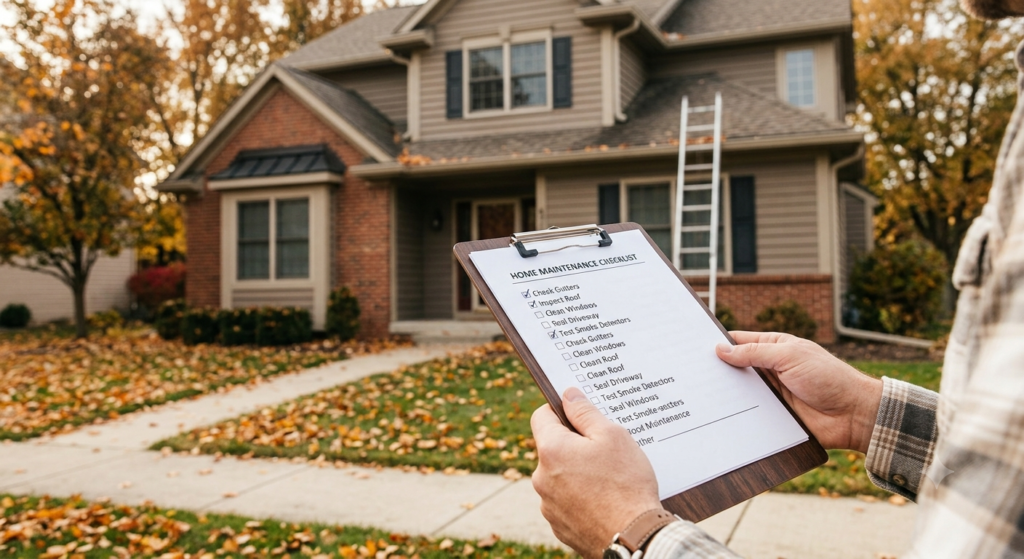
The Home Maintenance Checklist Nobody Hands You When You Buy a House
Nobody sits you down at closing and explains what your house actually needs from you. You get the keys, a stack of paperwork, and a vague sense that something is probably supposed to happen every few months. This is the home maintenance checklist that fills that gap — organized by season and by system, so you always know what to check next instead of guessing.
Most homeowners don't skip maintenance because they're lazy. They skip it because nobody ever laid out, in plain language, what "maintaining a house" is supposed to look like week to week. A gutter looks fine until the day it doesn't. A furnace runs quietly until the morning it won't start. The fix isn't a giant one-time to-do list — it's a rhythm you keep coming back to.
Why a seasonal home maintenance checklist works better than a giant master list
A 100-item master checklist looks impressive and gets ignored within a week. It's too much at once, and half the tasks don't even apply to the current month. A seasonal home maintenance checklist breaks the same work into smaller, weather-driven chunks, so you're only ever dealing with what your house is actually facing right now.
Think of it this way: your roof doesn't care about your gutters in January the way it does in November, right before the leaves clog everything up. Your air conditioner doesn't need attention in December. Matching tasks to the calendar means you're never doing pointless work, and you're never caught off guard by something predictable.
The four-season maintenance rhythm
Spring: drainage, damage check, and cooling prep
Spring is inspection season. Winter is done taking its toll, and this is when you find out what it left behind.
- Walk the perimeter and check for winter cracking, heaving, or new gaps around the foundation
- Clear gutters and downspouts, then check that water is actually draining away from the house, not pooling against it
- Inspect roof shingles and flashing for anything loosened by ice or wind
- Have the air conditioning system checked before the first real heat wave hits
- Check exterior caulk and weatherstripping for cracking
Summer: cooling load, moisture, and storm exposure
Summer maintenance is less about visible damage and more about performance — is everything still working the way it should under real load?
- Monitor indoor humidity; a musty smell or foggy windows can mean moisture control is falling behind
- Change HVAC filters more frequently since the system is running constantly
- Check outdoor drainage after any heavy storm
- Inspect deck, fencing, and siding for sun and heat damage
- Test smoke and carbon monoxide alarms — an easy task that's easy to forget
Fall: heating readiness and freeze prevention
Fall is the last comfortable window to fix anything before cold weather makes every repair harder and more urgent.
- Service the furnace or heating system before you actually need it
- Clear leaves from gutters again — this is usually the heaviest debris season
- Disconnect and drain outdoor hoses, and insulate exposed pipes
- Check attic insulation and look for any drafts around windows and doors
- Inspect the chimney and fireplace if you have one
Winter: freeze watch, indoor air, and roof load
Winter maintenance is mostly about watching, not fixing — catching small problems (a drip, a draft, a cold spot) before they turn into frozen pipes or ice dams.
- Watch for ice dam buildup on the roofline
- Keep an eye on indoor humidity — too dry causes cracking, too damp causes condensation and mold risk
- Check that heating vents and returns aren't blocked by furniture
- Know where your main water shutoff is, in case a pipe does freeze
- Watch for unusual noise from the heating system, which often shows up before a full breakdown does
The monthly checks that don't wait for a season
Some tasks aren't tied to weather at all — they're just things that quietly cause damage the longer they're ignored. These belong on a repeating monthly checklist, no matter what month it is.
| Task | Why it matters |
|---|---|
| Test smoke and CO alarms | Batteries fail silently; this is the one check with zero excuse to skip |
| Check under sinks for leaks | Slow leaks cause mold and rot long before they're visible from the outside |
| Inspect HVAC filters | A clogged filter strains the whole system and raises energy bills |
| Walk the exterior | Catches new cracks, stains, or pest entry points early |
| Test garage door safety features | A simple reverse-sensor test that most people never think to run |
How to prioritize when everything feels urgent
Not every issue deserves the same reaction. Homeowners burn out fast when they treat a minor stain the same way they'd treat a gas smell. A simple three-tier system keeps things sane:
- Monitor: routine wear or a small change. Note it, check again next inspection.
- Fix soon: recurring issues, wear, or a performance drop. Plan the repair before it grows.
- Act now: active water, electrical, gas, fire, or structural risk. Stop the hazard if it's safe to, then call a professional immediately.
That third tier is the only one where hesitation actually costs you. Everything else can wait for the next scheduled check without turning into an emergency.
Building a maintenance habit that actually sticks
The checklist only works if you use it. A few things that make it stick:
- Keep a printable or digital tracker with dates, not just a task list — knowing when something was last checked is half the value
- Pair tasks with something you already do, like changing the filter on the same day you pay rent or a mortgage bill
- Take photos during inspections. Comparing this spring's gutter photo to last spring's tells you more than memory ever will
- Don't aim for perfection in one weekend. A partial checklist done consistently beats a full one done once
Frequently asked questions
- What should be in a basic home maintenance checklist?
- Roof and exterior, drainage, foundation, heating and cooling, plumbing, electrical safety, appliances, alarms, and seasonal prep — grouped by timing and priority rather than crammed into one long list.
- How often should I really be doing this?
- Monthly for filters, alarms, and leak checks. Seasonally for anything weather-driven. Immediately for anything involving active water, gas, or electrical risk.
- Is a printable checklist actually worth using?
- Yes — mainly because it lets you compare conditions over time. A note that says "small crack, spring 2025" is far more useful a year later than trying to remember if it's gotten worse.
- When should I stop DIYing and call a professional?
- Any time the task involves electrical hazards, gas lines, fire risk, structural movement, or water intrusion beyond a small drip. Those aren't places to guess.