Maintenance · Roadside
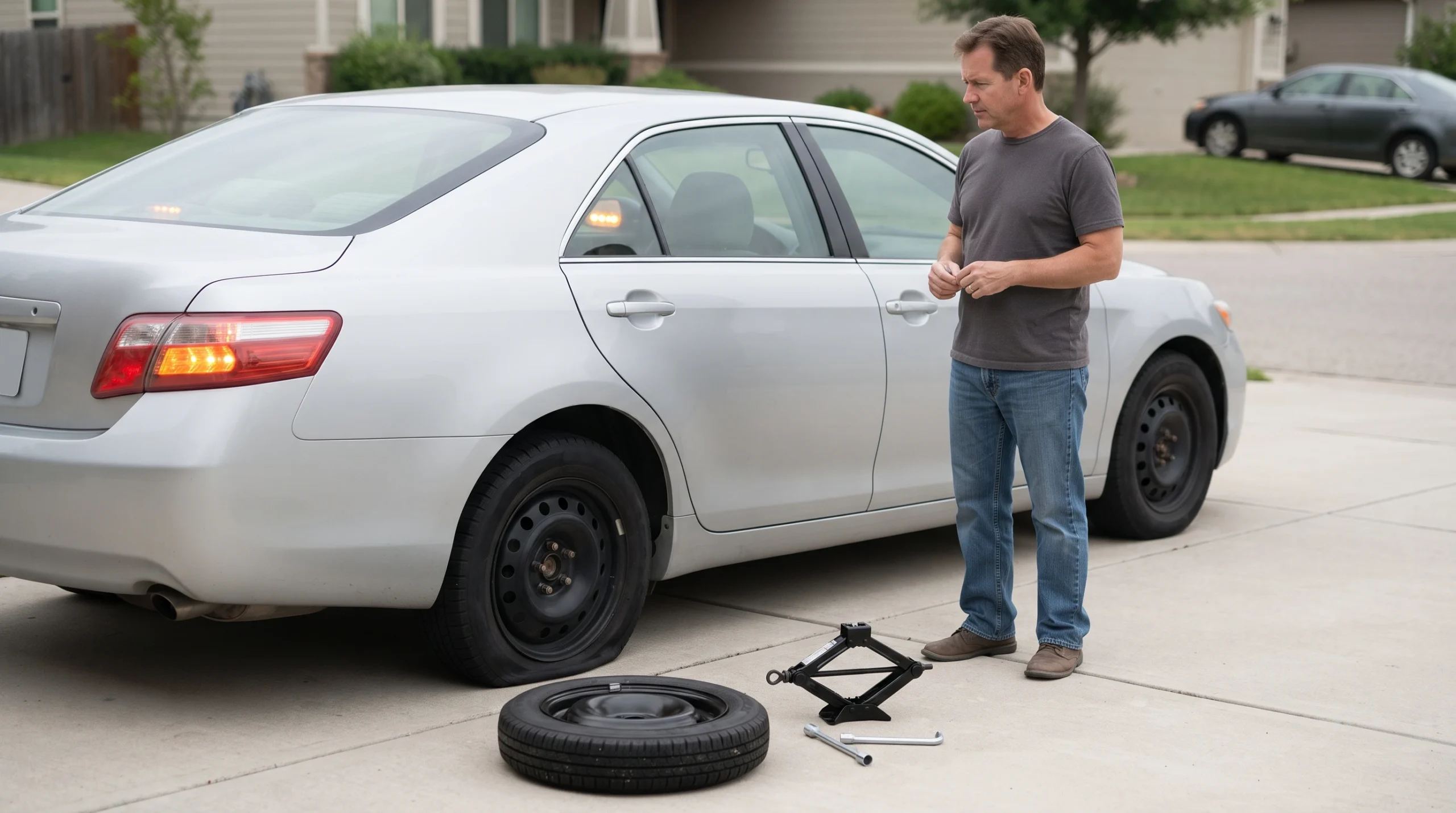
Get the car fully off the road and the tools out before you touch a lug nut.
A flat does not automatically mean a tow. If you have the spare and the jack that came with the car, you can do this on a driveway or a wide shoulder. This guide is for that kit. It is not for a shop lift, and it is not a tire sales page.
What you need
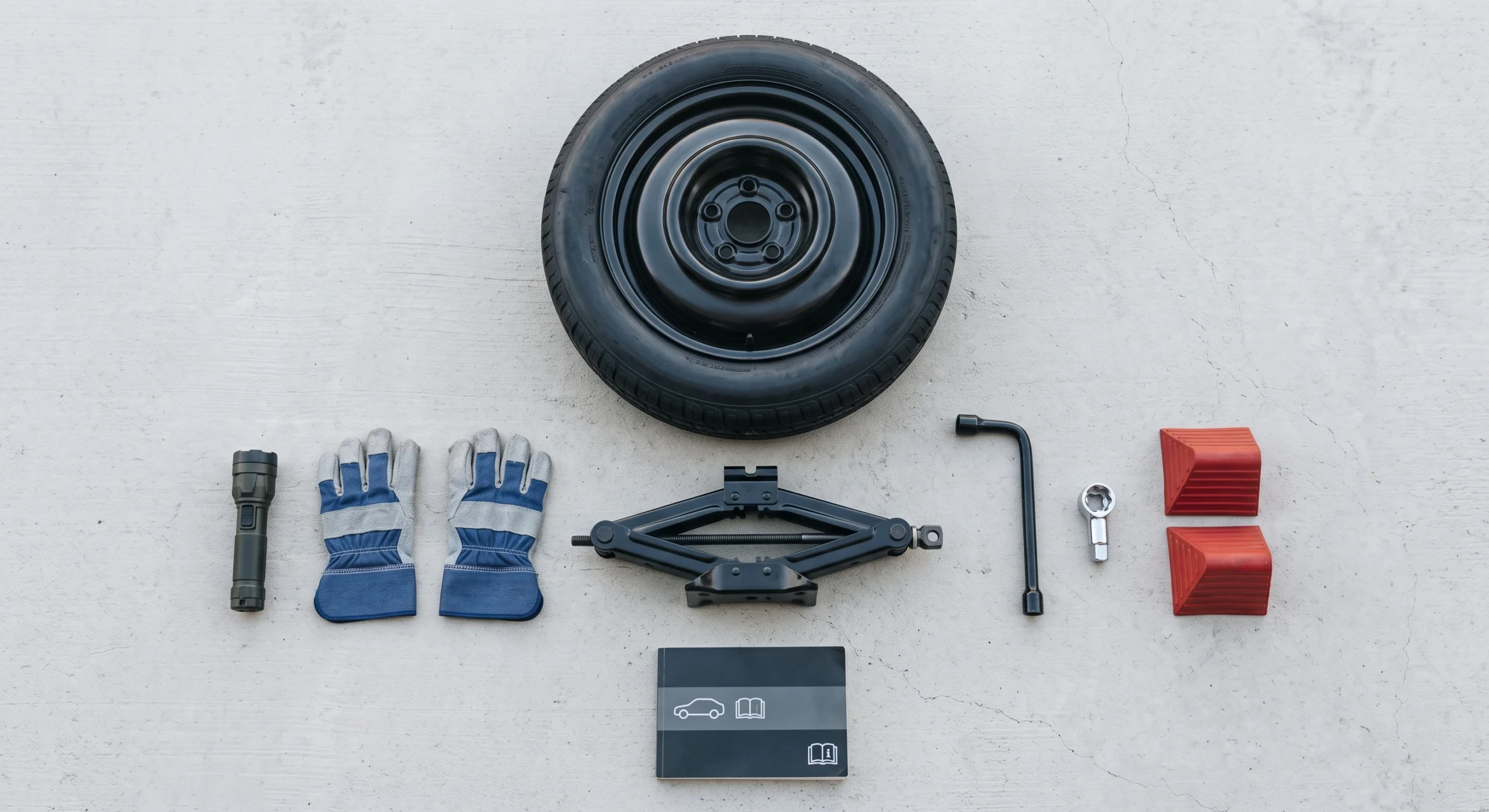
Most of this is already in the trunk, under the floor board.
Look in the trunk well or behind a side panel. You should find a spare, a scissor jack, and a lug wrench. The owner’s manual is worth grabbing too, because the jack point is marked in there.
A few extras make it less miserable:
- The locking-nut key, if one lug nut looks different from the others
- Wheel wedges, or a couple of bricks
- Gloves and a flashlight
- A short board under the jack if the ground is soft
Is it hard?
Not really. It is awkward. The spare is heavier than it looks, and the first time you will spend a minute hunting for the jack point. The two mistakes that actually cause problems are loosening the nuts after the car is in the air, and jacking on the wrong piece of metal. Do those two things right and the rest is just turning a wrench.
Before you loosen anything
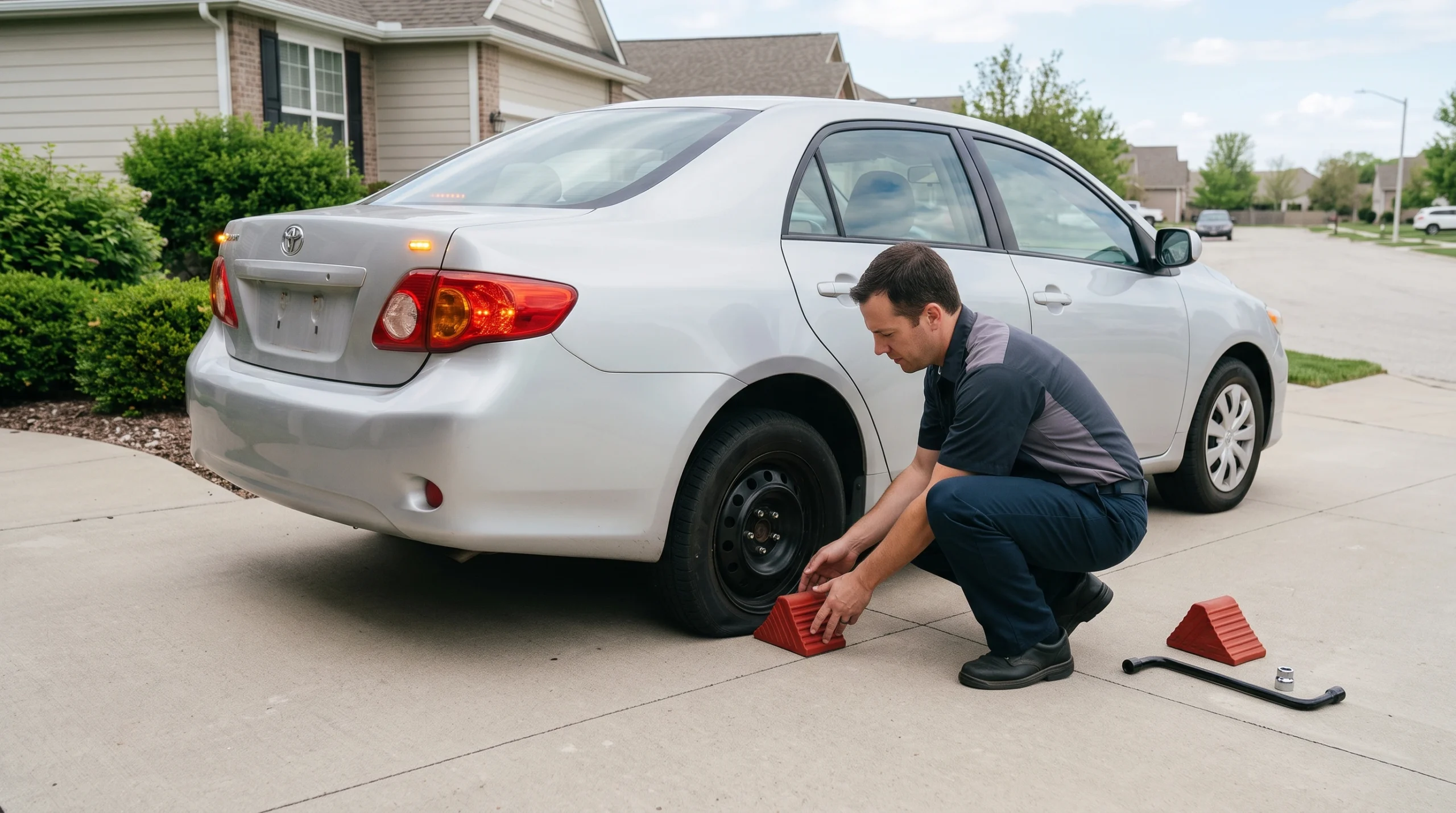
- Ease off the road. Do not stab the brakes.
- Hazards on.
- A parking lot or a flat driveway is better than a narrow shoulder. Skip hills, gravel, and wet grass if you have a choice.
- Park, or put a manual in gear. Set the parking brake.
- Everyone out, on the side away from traffic.
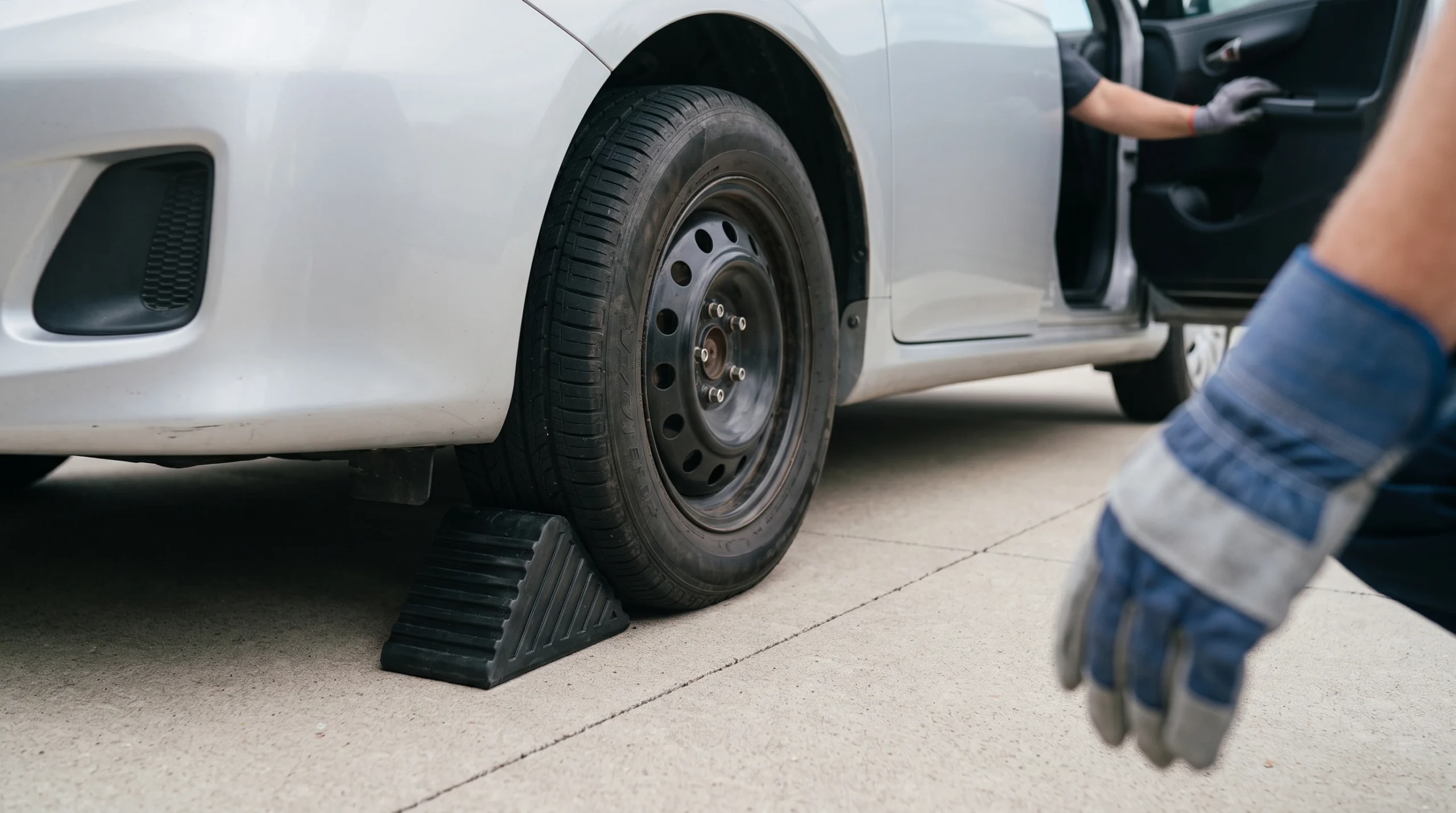
Wedge the wheels that are staying on the ground.
Changing a rear tire? Block the front wheels. Changing a front tire? Block the rear wheels. A lot of short guides skip this. It is the thing that keeps the car from rolling off the jack.
How to change the tire
1 Hubcap off, if there is one
Some covers pop off with the flat end of the lug wrench. Some have little plastic nuts. If you can already see the lug nuts, leave it.
2 Loosen the nuts while the tire is still down
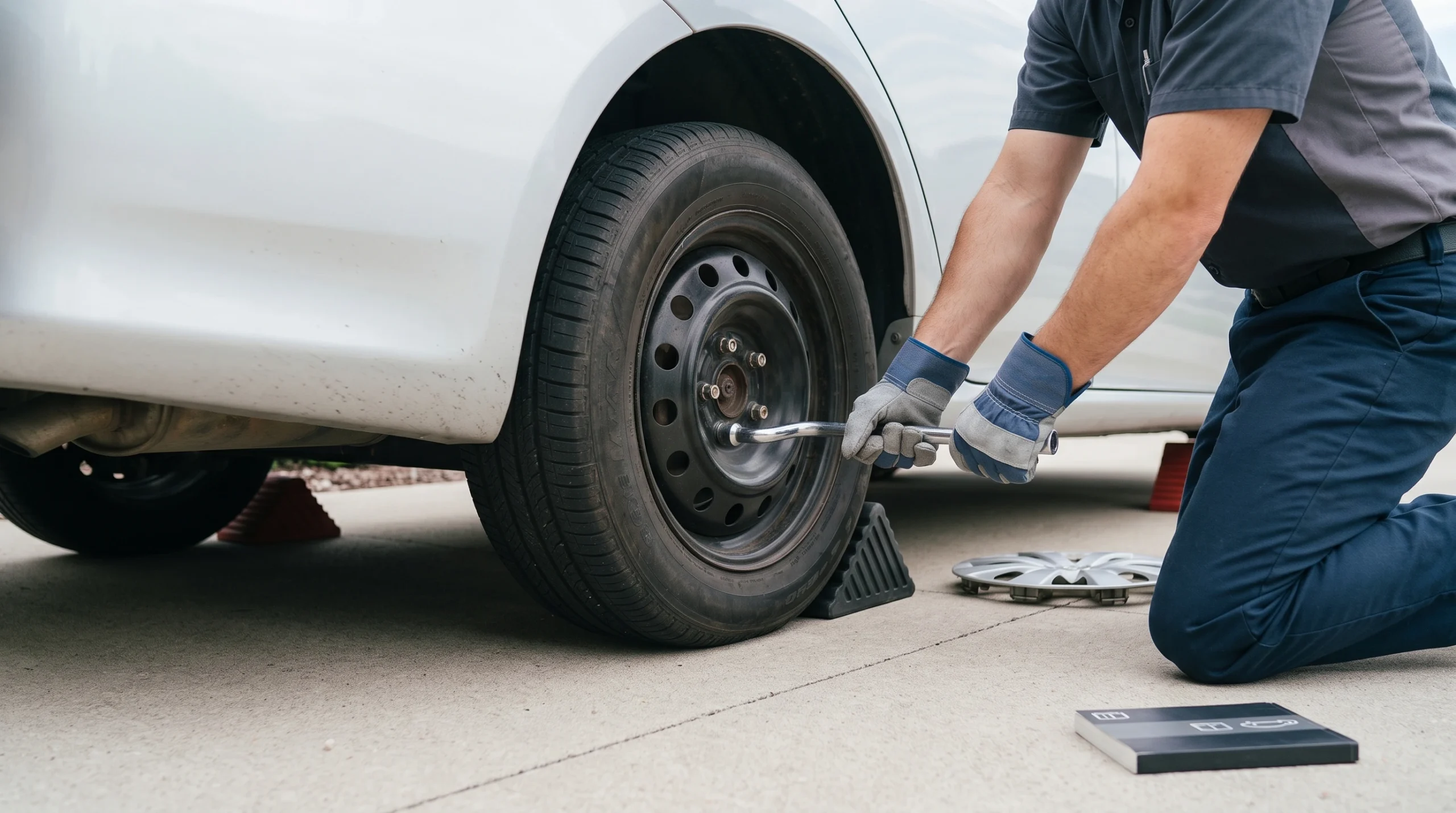
Do this before you jack. Once the wheel is in the air, it spins and the nut will not break free.
Seat the wrench and turn counterclockwise. If a nut is stuck, keep the wrench flat and lean on the end of the handle. A half turn on each nut is enough. Do not take them off yet.
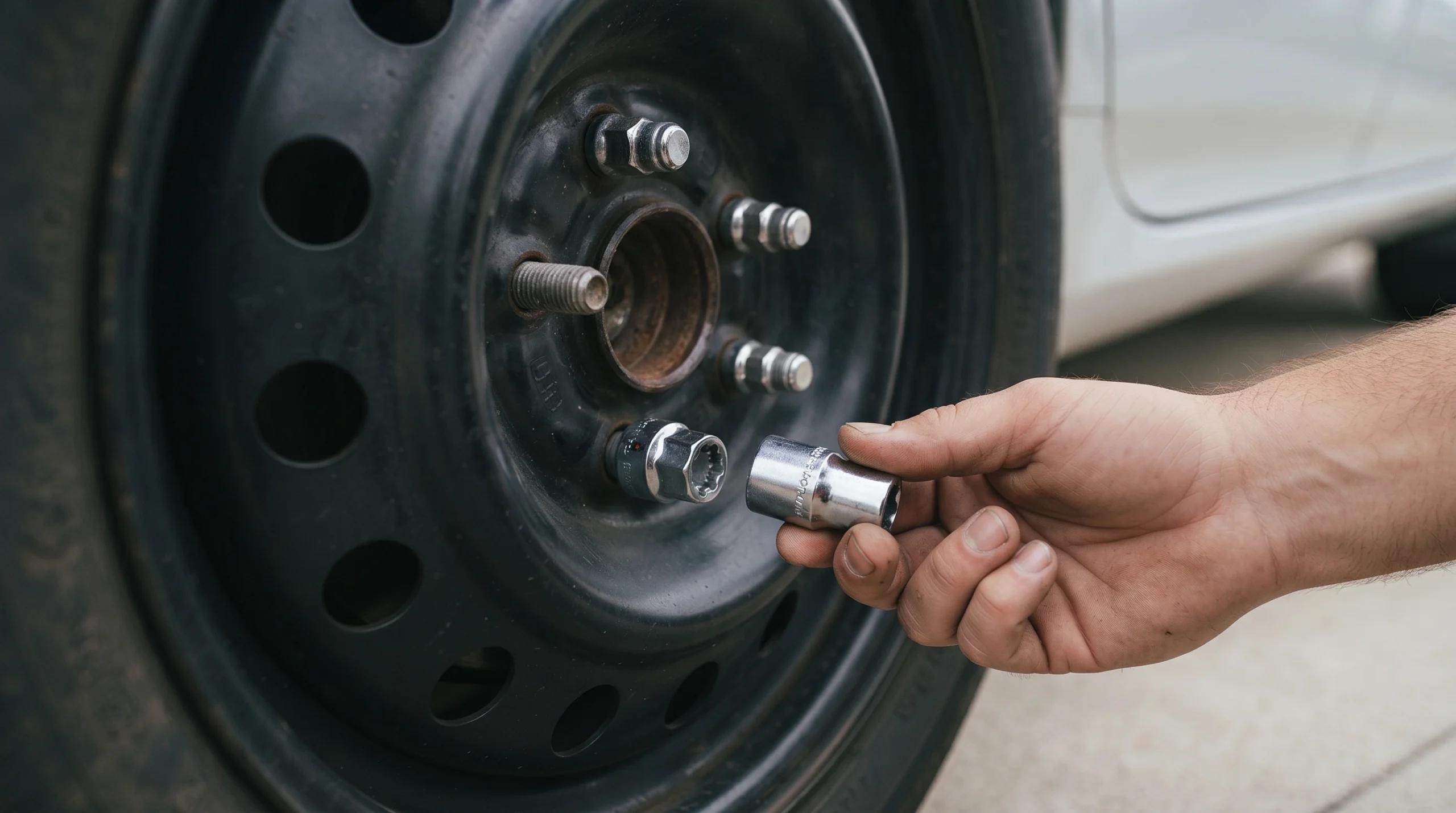
One nut that does not match the others needs this little keyed socket.
3 Jack on the marked point
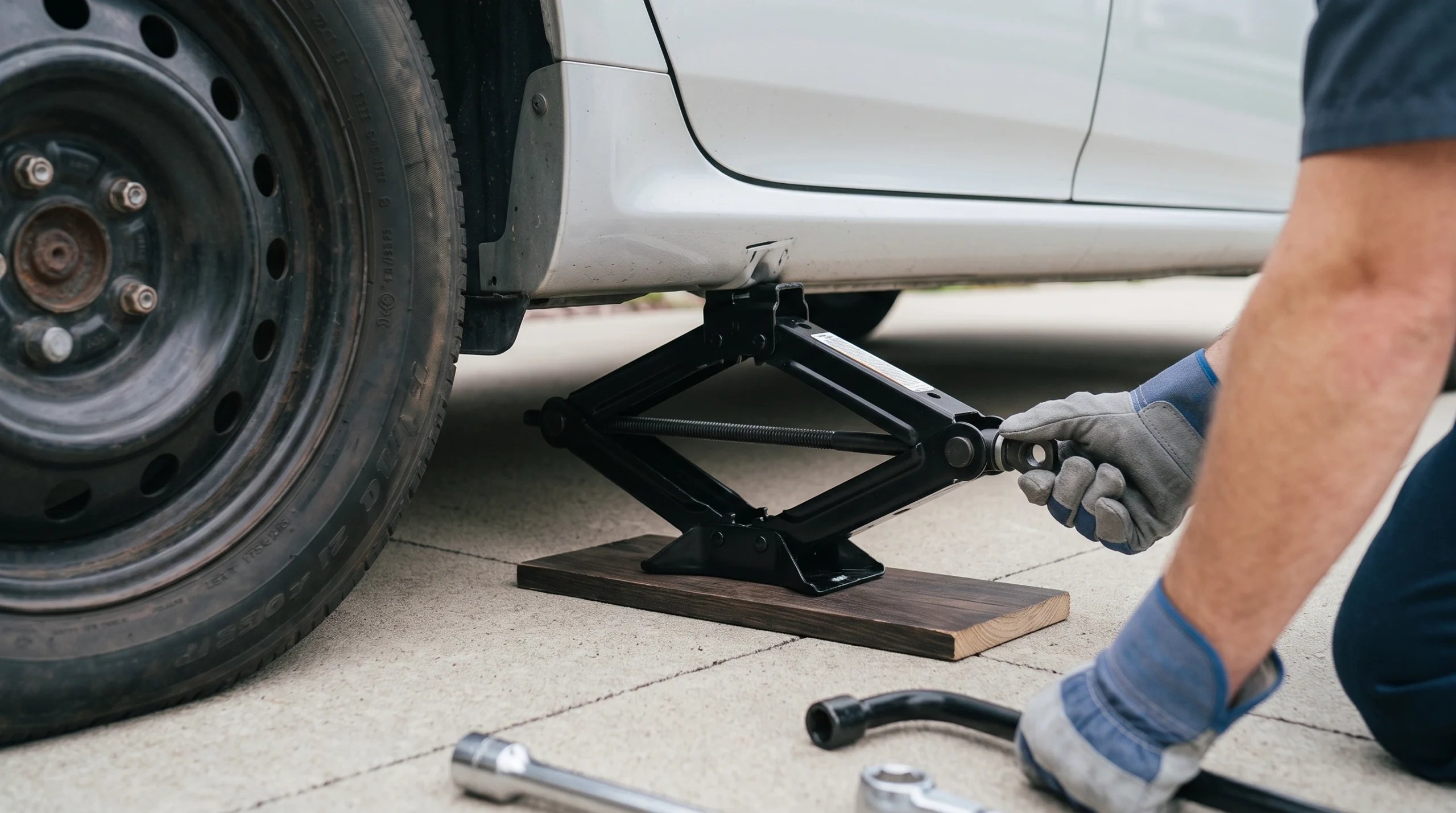
The jack sits on the reinforced notch, not on the floor pan. A board helps on soft ground.
The lift point is beside the flat, along the rocker. On most cars it is a notch or a thicker pad in the pinch weld. The manual has a drawing. If you cannot find a mark, look for a small arrow or a seam that feels heavier than the sheet metal around it.
Do not put the jack under plastic cladding, the middle of the floor, or a suspension arm unless the manual says that is the spot. Raise it only until it touches.
4 Lift just enough
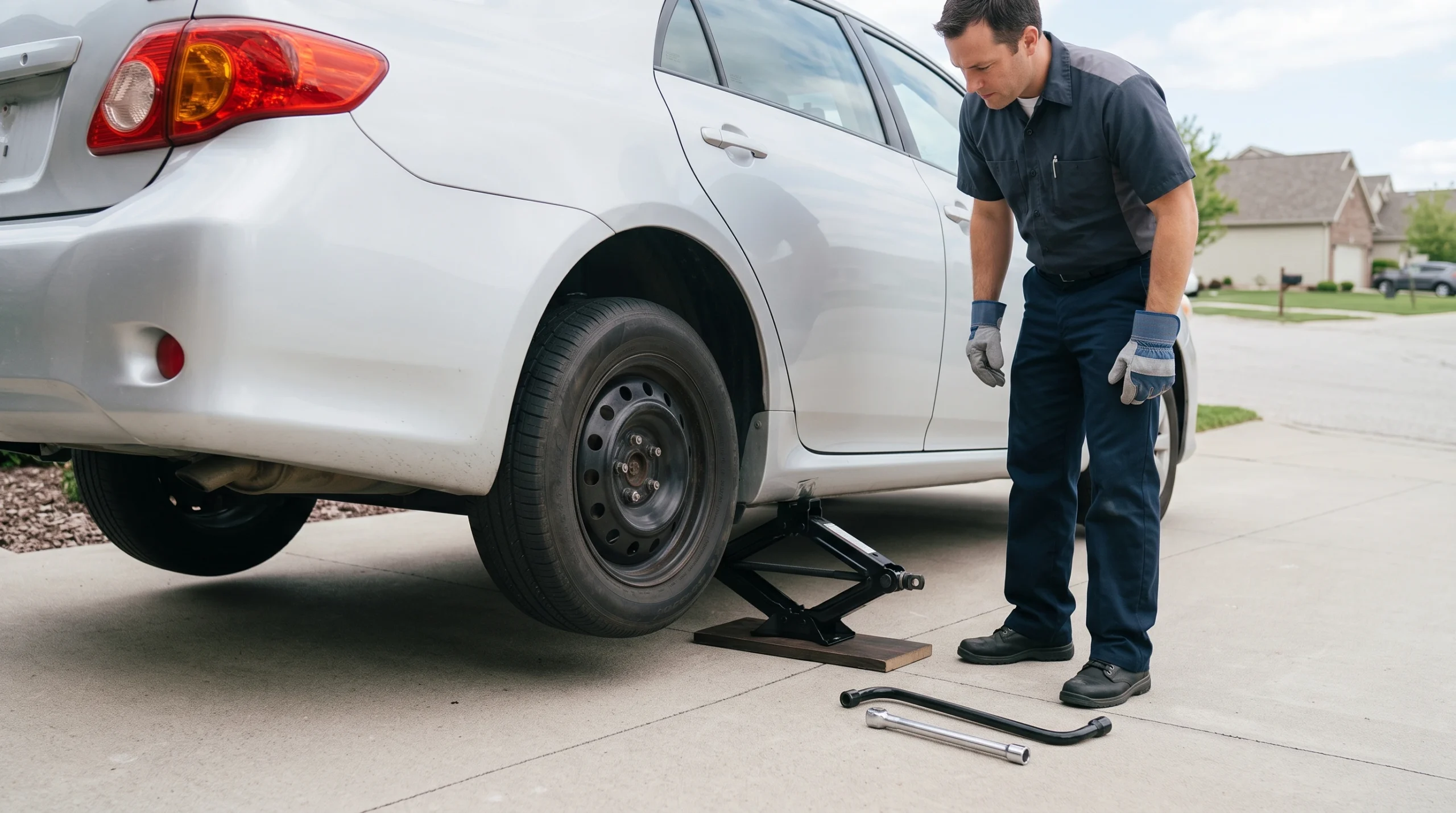
Turn the jack slowly. Stop when the flat is about 4 to 6 inches off the ground. The spare is thicker than the flat, so a little extra room matters.
5 Pull the flat off
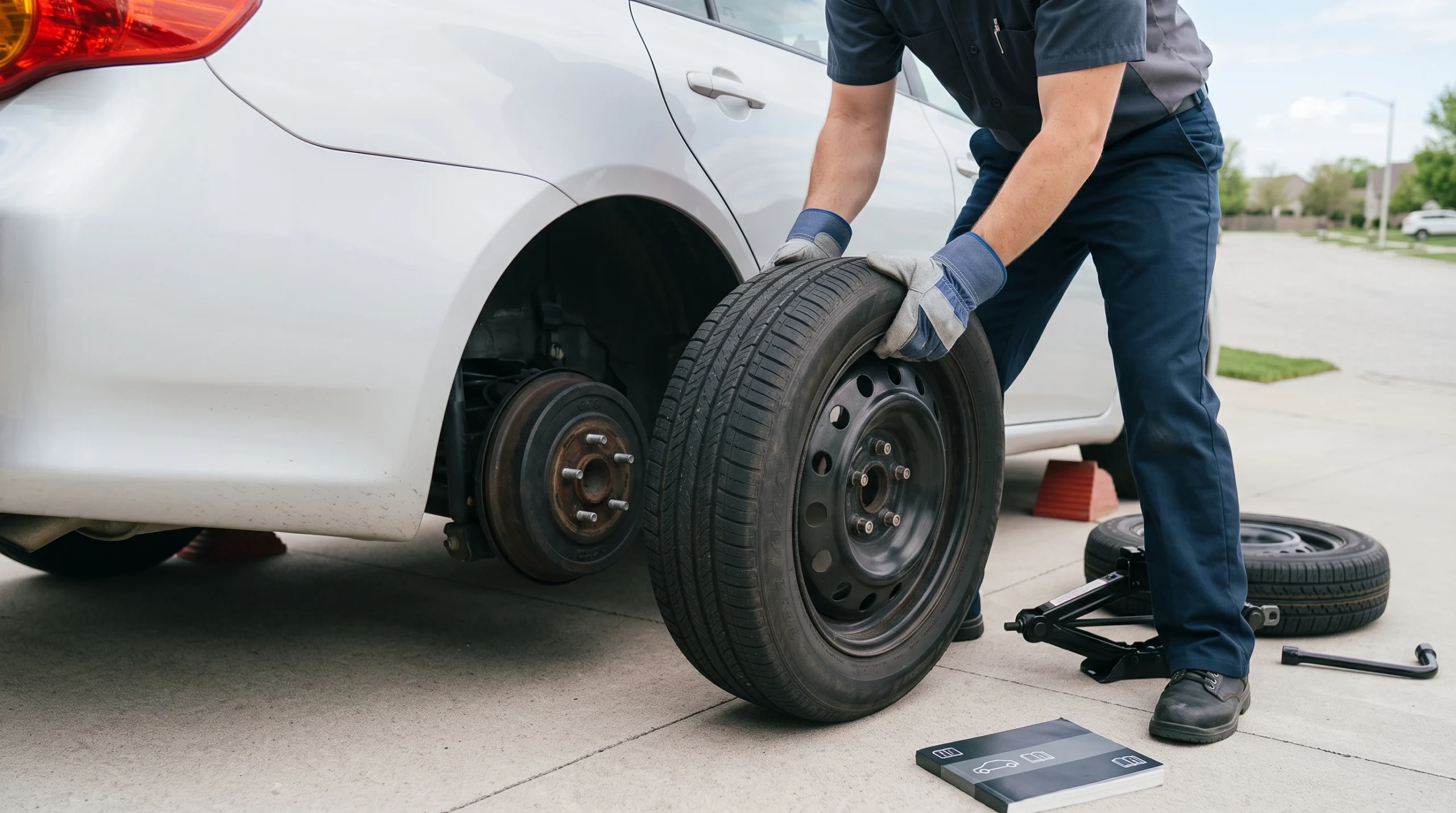
Spin the nuts off by hand and drop them in the hubcap so they do not roll into the grass. Pull the wheel straight toward you. Lay it flat. A wheel standing up will wander off.
Rust sometimes sticks the wheel to the hub. Do not pry against the jack. A couple of tugs, or a kick on the sidewall with the sole of your shoe, usually pops it loose.
6 Spare on
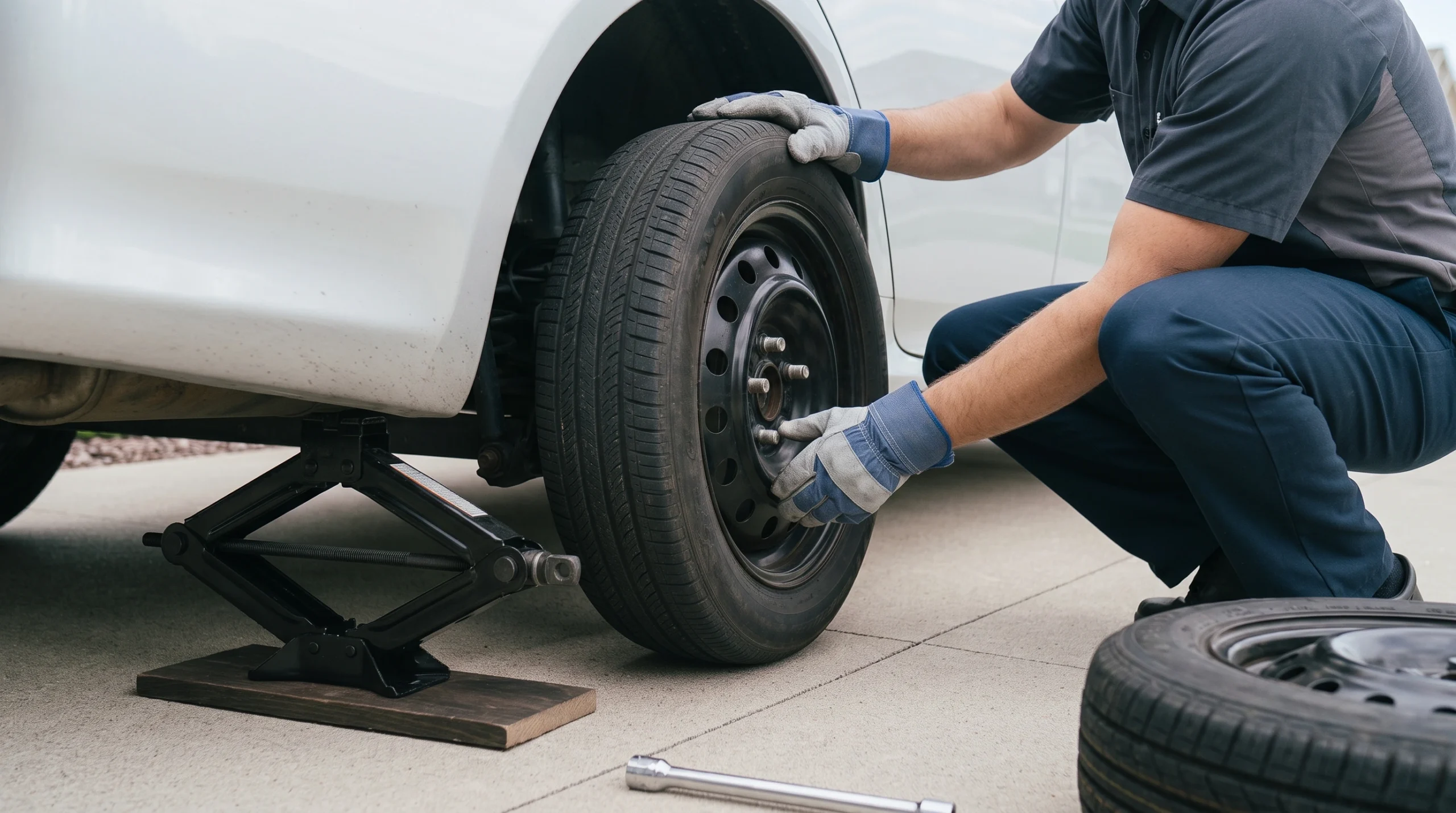
Lift the spare, line the holes up with the studs, and push it on until it sits flat. Start every nut by hand. If you use the wrench too early you can cross-thread a stud. Snug them by hand only. The real tightening comes after the car is down.
7 Lower it, then tighten in a star
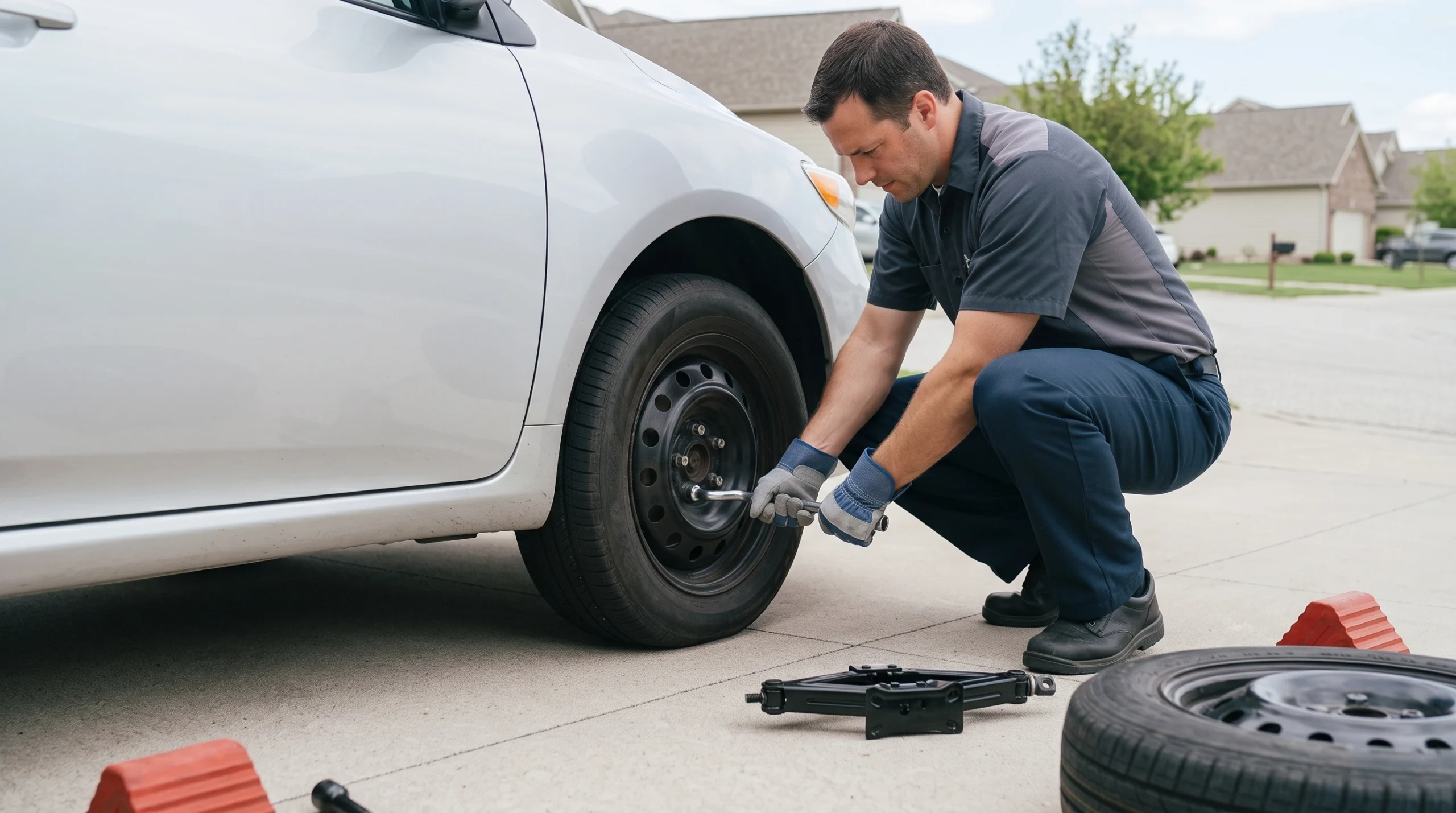
Drop the jack until the spare is holding the car, but leave the jack in place for now. Then use the wrench.
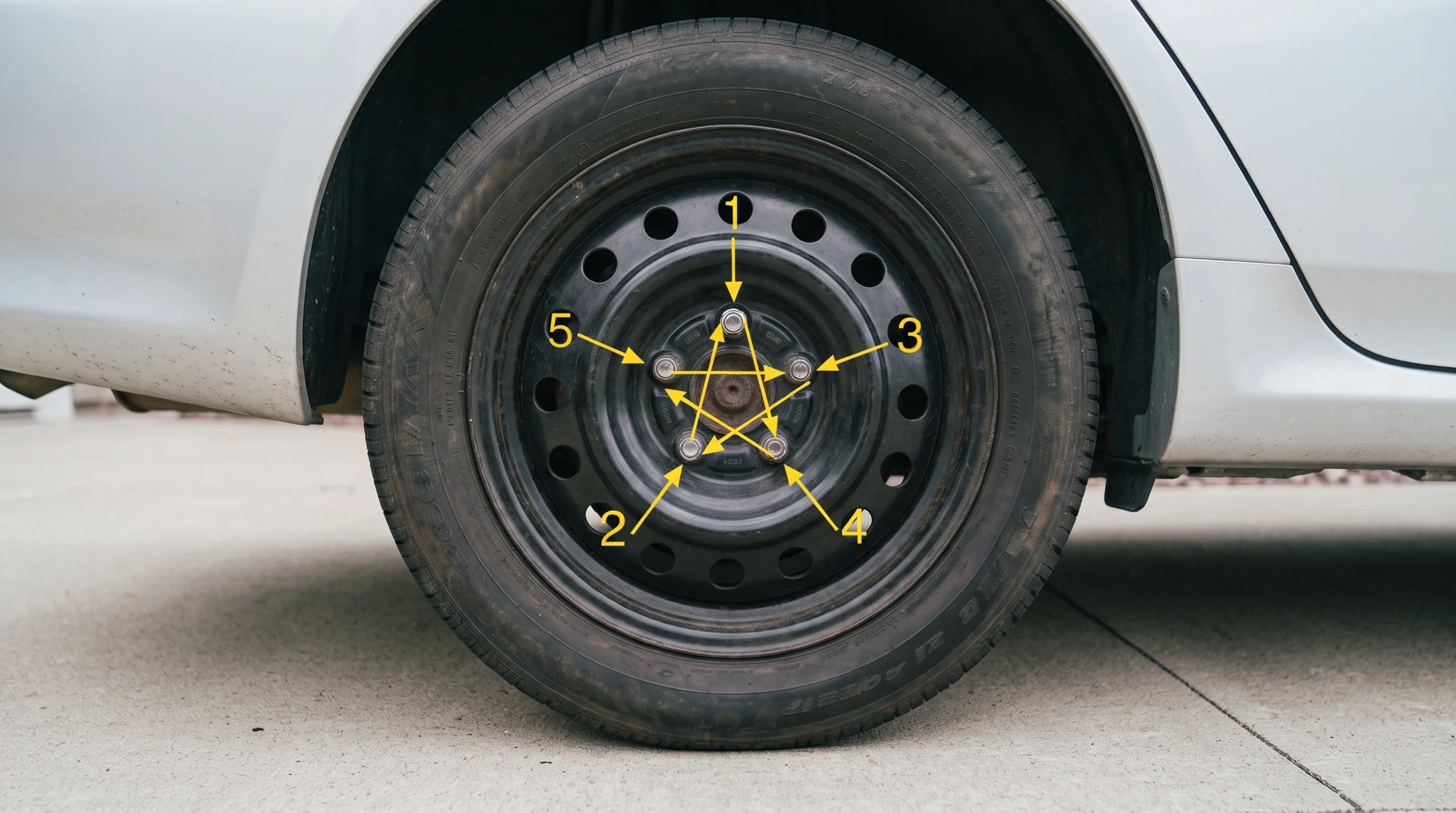
Five nuts. Tighten across the wheel, not around it.
Pick any nut and call it 1. The nut straight across from it is 2. Then 3 is across from the next loose one, and so on, until you have drawn a star. Do not go 1, neighbor, neighbor. That cocks the wheel. Go around the star twice. Lean on the wrench. Do not jump on it.
Lower the car the rest of the way, pull the jack out, and give each nut one more pull. The torque number is in the manual. If you do not have a torque wrench, snug is enough to get to a shop. Do not invent a number.
8 Pack up
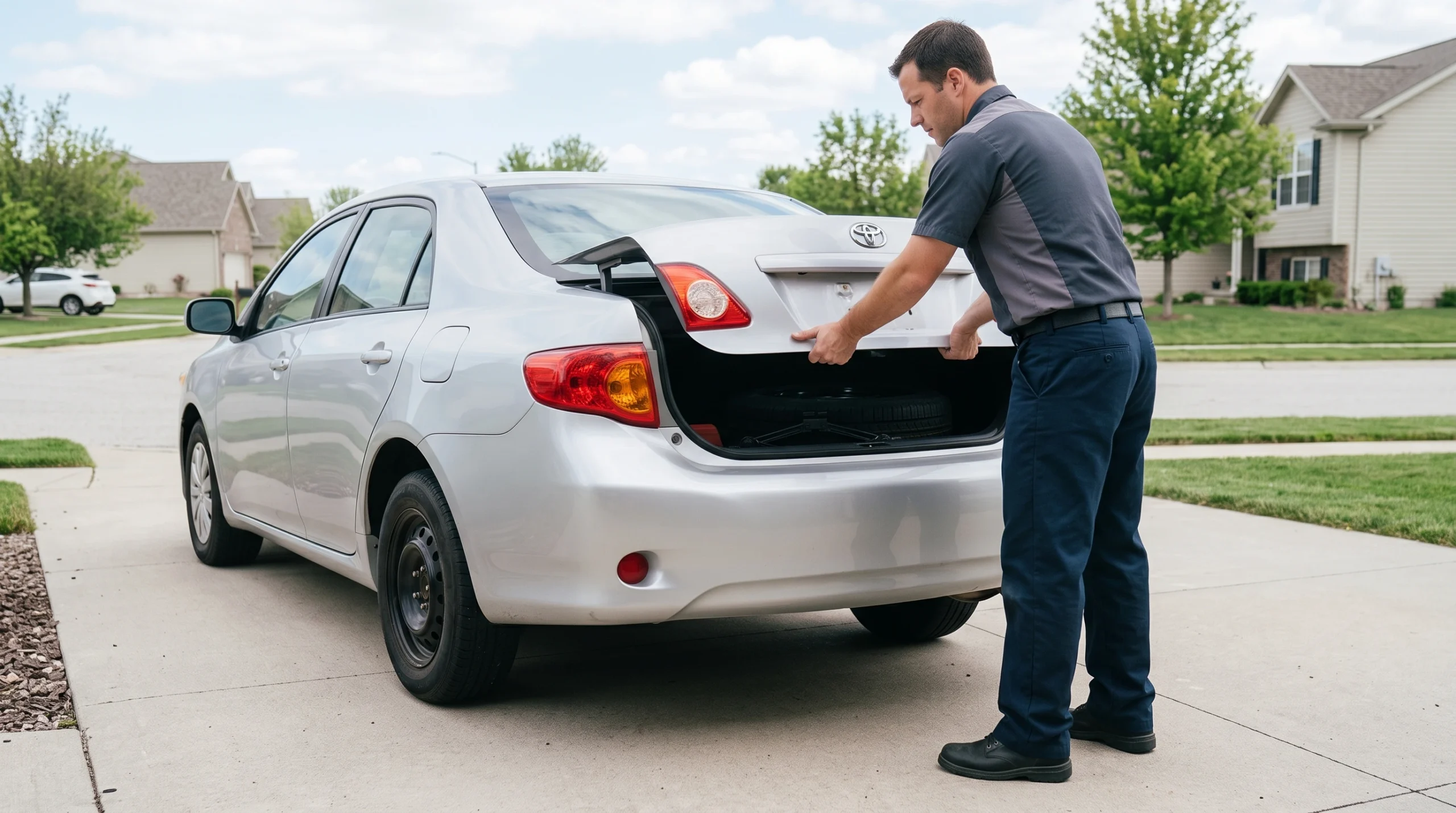
Flat, jack, and wrench go in the trunk. Hubcap too, if it does not fit the spare. Check the spare pressure if you have a gauge. Drive off slowly. After about 50 miles, stop and check the nuts again. They can loosen a little on the first stretch.
What that small spare can and cannot do
A donut is a way to reach a tire shop. It is not a fifth normal tire.
- Most of them are limited to about 50 mph, or 80 km/h.
- Skip long highway runs and a full trunk of weight if you can.
- Get the damaged tire patched or replaced soon.
- A full-size spare that matches the other three is a different story. You can drive normally, but the bad tire still needs a look.
Where the jack actually goes
Beside the flat, on the lift point in the manual. On a normal sedan or SUV that is a notch in the pinch weld, the seam under the doors. Not the flat floor. Not the plastic rocker cover. If you are guessing, stop and look at the manual. A wrong jack point is how a door sill gets creased.
No spare, or no jack
A lot of newer cars, and plenty of EVs, come with a compressor and a bottle of sealant instead of a spare. Read the kit before you plug it in. Sealant is for a small hole in the tread. It will not save a torn sidewall. If the tire is shredded, or the kit will not hold air, call for a tow. Do not drive on the rim.
Run-flats can go a limited distance. That distance is in the manual. They still need a shop.
Changing a tire with no jack is not a roadside trick. Do not stack rocks under the frame or lever on the bumper. Missing jack means you call someone.
How long it takes
Fifteen minutes if you have done it and the tools are where you left them. Closer to half an hour the first time, in the dark, or if a locking nut slows you down.
Questions people ask
How do you change a tire on a car?
Level ground, nuts loose first, jack on the marked point, spare on, car down, then tighten across the wheel in a star.
What do I need?
Spare, jack, lug wrench. The lock key if you have wheel locks. Wedges and a flashlight if you have them.
Loosen the nuts before or after the jack?
Before. The tire has to stay still or the wrench just spins the wheel.
Can I do this at home?
Yes. A flat driveway is a better place than the side of a road. Same steps.
Can I buy a tire and put it on myself?
You can swap a wheel that is already mounted. A new tire onto a bare rim needs a machine. Have the shop mount and balance it, then you can swap the finished wheel at home if you want.
The wheel will not come off
Nuts are off and it is still stuck? Kick the sidewall with your shoe sole, or lower the car a touch and rock it. Do not pry on the jack.
Stop and call
- You cannot get clear of traffic
- The spare is flat
- You cannot find the jack point or the lock key
- The car feels unsteady on the jack
- The wheel is broken, not just flat
A tow costs less than a car coming off a jack.
When you get home
Have the bad tire checked. A nail in the tread can often be patched. A cut in the sidewall cannot. Put a good spare back in the car, and look at its pressure once a month. The spare people forget is the one that is flat when they need it.
Short version, if you are standing on the shoulder right now: safe spot, nuts loose first, jack on the notch, spare on, star pattern last.